Water Freedom System Official Website

Water Freedom System

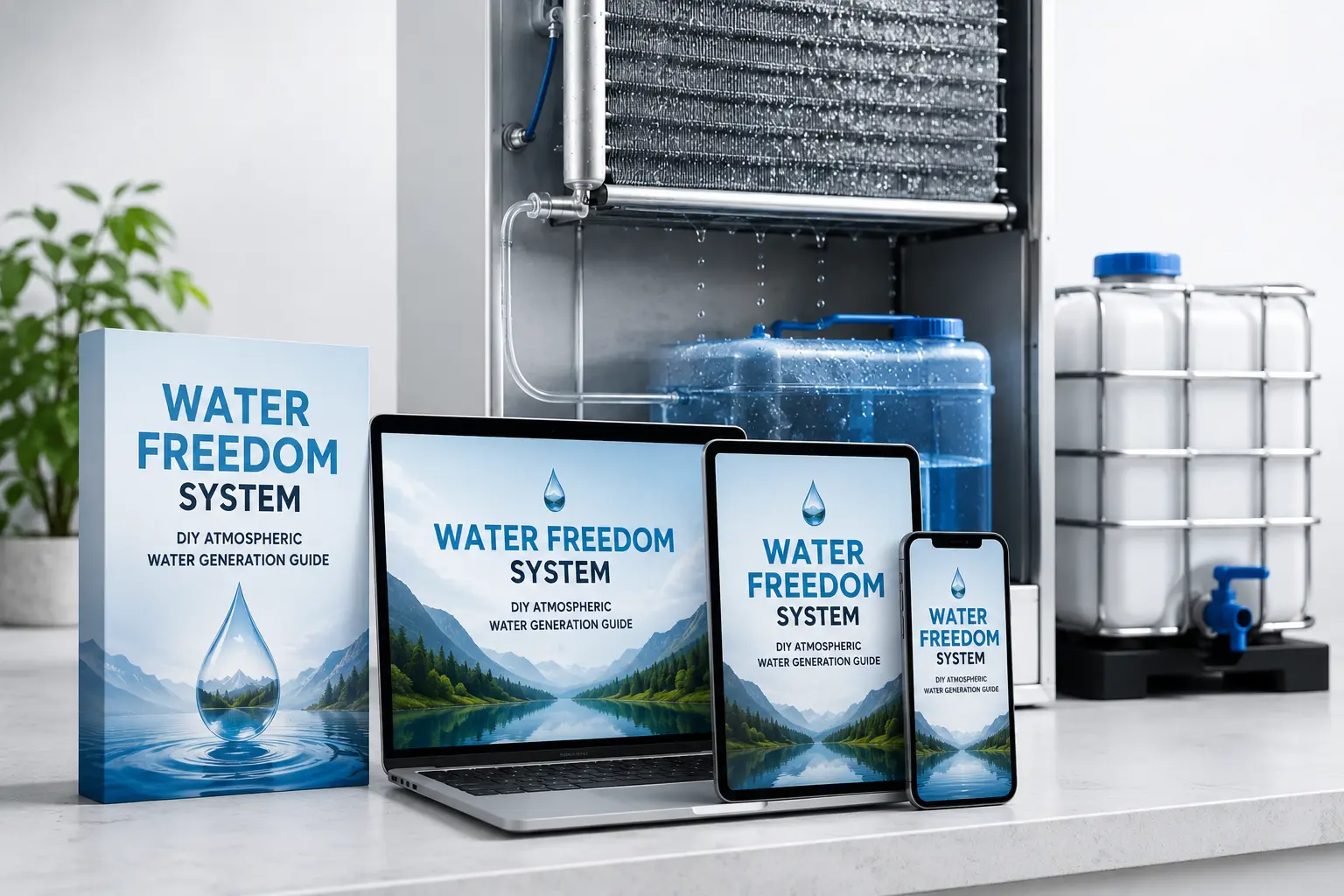
Water Freedom System is a beginner-friendly DIY atmospheric water generator guide that teaches you how to build a compact water-from-air system at home using affordable, readily available materials.

The guide explains how atmospheric water generation works by extracting moisture from the air, converting it into liquid water through condensation, and using filtration to help improve water quality. With step-by-step instructions, Water Freedom System makes it easier to understand the basics of building your own atmospheric water generator.

If you're interested in DIY water generation, off-grid water solutions, emergency preparedness, or water independence, Water Freedom System offers an educational approach to exploring alternative water sources. However, drinking-water safety depends on proper purification, sanitation, and testing.

Water Freedom System

      Water Freedom System Customer Reviews

Water Freedom System Customer Reviews
John M.

“I was interested in understanding how water can be collected from moisture in the air, which led me to the Water Freedom System. The guide explained the basic process and the role of different components clearly. I found the DIY approach interesting and useful for learning more about atmospheric water generation and household water preparedness.”

Water Freedom System Customer Reviews
Linda C.

“I found the Water Freedom System interesting because of its focus on water independence. The instructions helped me learn more about atmospheric water generation and alternative water solutions. It is a useful educational resource for people interested in self-sufficiency.”

Water Freedom System Customer Reviews
Sarah L.

“One aspect I appreciated about the Water Freedom System was its focus on reducing dependence on bottled water. The guide helped me learn more about atmospheric water generation and alternative water solutions. It can be a useful educational resource for people interested in water independence and emergency preparedness.”

What is Water Freedom System?

Water Freedom System

The Water Freedom System is a digital DIY guide designed to teach beginners how to build a compact Atmospheric Water Generator (AWG) at home. The guide explains how to collect moisture from the surrounding air and convert it into liquid water through condensation. Instead of purchasing an expensive, ready-made atmospheric water generator, users are introduced to the idea of assembling a system using commonly available materials and components.

The main concept behind the Water Freedom System is atmospheric water generation, a process that uses cooling technology to extract water vapor from the air. When humid air comes into contact with a sufficiently cold surface, moisture can condense into tiny water droplets. These droplets can then be collected in a reservoir and subjected to appropriate filtration and purification processes. The guide aims to explain this process in a simple and understandable way, making it accessible to people who may have little technical or engineering experience.

Water Freedom System is intended as an educational resource for individuals interested in alternative water sources, DIY projects, and off-grid living. The program explains the basic principles of building an atmospheric water generator and provides guidance on the materials and assembly process. However, the actual performance of a DIY system depends on factors such as humidity, temperature, cooling efficiency, electricity consumption, and component quality.

For people interested in emergency preparedness and water independence, atmospheric water generation may be an interesting technology to explore. However, generating drinking water safely requires more than collecting moisture from the air. Proper filtration, purification, sanitation, and water-quality testing are essential to reduce potential health risks. A DIY water generator should not be assumed to produce safe drinking water without appropriate verification.

Overall, the Water Freedom System presents a way to learn about atmospheric water generation and explore the concept of building a home-based water collection system. Before purchasing the guide or investing in construction materials, users should carefully evaluate the expected water output, total building costs, energy requirements, and safety considerations.

How Does Water Freedom System Work?

The Water Freedom System works by explaining the basic technology behind an Atmospheric Water Generator (AWG), a system designed to collect moisture from the surrounding air and convert it into liquid water. The process is based on condensation, which occurs when water vapor in the air comes into contact with a sufficiently cold surface and turns into tiny water droplets. Water Freedom System introduces this concept through a DIY approach, helping users understand how they can explore building a compact atmospheric water generator at home.

The process begins when a fan draws air from the surrounding environment into the system. This air naturally contains varying amounts of moisture, depending on factors such as humidity and temperature. As the air passes over a cooling surface, the temperature may fall below the dew point, causing water vapor to condense into liquid droplets. These droplets are then collected in a reservoir for further treatment.

After collection, the water may pass through filtration and purification stages designed to reduce certain impurities. However, condensed water is not automatically safe for drinking, and the effectiveness of any treatment system depends on its design, maintenance, and testing. Proper sanitation and appropriate purification are essential when water is intended for human consumption.

The Water Freedom System focuses on helping beginners understand the general principles of atmospheric water generation, including moisture extraction, condensation, water collection, and system maintenance. Its practical usefulness depends on the quality of the instructions, the components used, and environmental conditions. Humidity, temperature, cooling efficiency, and electricity availability can all influence the amount of water a system produces.

Why Choose Water Freedom System?

Water Freedom System
Made In USA

The Water Freedom System is designed as a DIY guide for people interested in building an atmospheric water generator at home using commonly available materials. If the program promotes sourcing components from local US hardware stores, users should verify the product's manufacturing and origin claims through the official website. The digital guide's availability does not necessarily mean that the physical components or the entire system are manufactured in the USA.

Water Freedom System
FDA Approved

The Water Freedom System focuses on teaching users about DIY atmospheric water generation and building a water-from-air system at home. However, there is no verified evidence provided here that the Water Freedom System itself is FDA-approved. FDA approval should not be claimed unless supported by official documentation or a specific FDA authorization.

Water Freedom System
GMP Certified

The Water Freedom System is a digital DIY guide that explains how to build an atmospheric water generator at home. However, there is no verified evidence provided that the Water Freedom System is GMP certified.
Good Manufacturing Practice (GMP) certification generally applies to manufacturing processes and facilities that meet established quality and safety standards. Since Water Freedom System is presented as a digital guide rather than a manufactured health or food product, its GMP certification status should be verified through official documentation before making this claim.


Water Freedom System
100% Natural

The Water Freedom System is a digital DIY guide that explains how to collect moisture from the air using atmospheric water generation technology. Since the system uses a condensation-based process to extract water vapor from the surrounding environment, it may appeal to people interested in exploring alternative water sources.
However, the claim "100% Natural" should be used carefully. Atmospheric water generation involves mechanical cooling, electricity, and potentially filtration or purification components. Water produced by the system is not automatically safe or chemical-free, and its quality depends on proper treatment and testing.

Science Behind Water Freedom System

The Water Freedom System is based on the scientific principle of atmospheric water generation, a technology that extracts moisture from the surrounding air and converts it into liquid water. This process uses the natural water cycle, particularly condensation, to collect water vapor present in the atmosphere. The same principle can be observed when water droplets form on the outside of a cold glass on a warm day.

Atmospheric water generators typically use a fan to draw air into the system, where cooling components lower the temperature of a surface. When the surface reaches a temperature below the dew point, water vapor in the air condenses into liquid droplets. These droplets are then collected in a reservoir for further treatment. The amount of water produced depends on environmental conditions such as humidity, temperature, airflow, and the efficiency of the cooling system.

The Water Freedom System introduces this science through a DIY approach, helping users understand how different components work together to collect atmospheric moisture. Its educational materials may explain the basic principles of condensation, water collection, filtration, and system maintenance, allowing beginners to explore the technology without requiring advanced scientific knowledge.

However, the science of condensation does not guarantee that every atmospheric water generator will produce safe drinking water. Collected water may contain contaminants introduced through the air, equipment, or storage system. Appropriate filtration, purification, sanitation, and water-quality testing are necessary when the water is intended for human consumption.

Key Ingredients in Water Freedom System 

1. Air Intake Fan
An air intake fan is an important component of an atmospheric water generator because it moves surrounding air into the system. Air naturally contains water vapor, and the amount of moisture available depends on humidity and temperature. The fan helps maintain airflow through the cooling section, where moisture extraction takes place. The amount of air moving through the system can influence how much moisture is available for condensation.

2. Cooling System
The cooling system is responsible for lowering the temperature of a suitable surface so that water vapor can condense into liquid water. This is one of the most important processes in atmospheric water generation. When humid air comes into contact with a surface that is sufficiently cold, water vapor may turn into droplets. This is similar to the condensation that forms on a chilled glass.

3. Condensation Surface
The condensation surface is the area where water vapor changes into liquid water. When the surface temperature falls below the dew point of the surrounding air, moisture can condense on it.
The efficiency of this process depends on factors such as surface temperature, airflow, humidity, and heat transfer. A well-designed condensation system should also allow the collected droplets to drain efficiently.

4. Water Collection Reservoir
A water collection reservoir gathers the liquid droplets produced during condensation. After water vapor turns into liquid, the droplets need to be directed into a suitable container. The reservoir should be designed to minimize contamination and allow easy cleaning and maintenance. Water-contact materials should be appropriate for their intended use.

5. Filtration System
The filtration system is used to help remove specific impurities from collected water. Depending on the filter type, it may address particles, sediment, or certain other contaminants.
Different filters serve different purposes. A sediment filter, activated carbon filter, and specialized treatment technology do not provide identical protection.

6. Purification Components
Purification components may be included to provide additional treatment after water collection. The appropriate treatment depends on the potential contaminants and the system's intended use.
Some water treatment methods are designed to address microorganisms, while others target dissolved substances or specific chemical contaminants. No single treatment method removes every possible contaminant.

7.Water Storage Container
A water storage container holds the collected or treated water. Suitable storage helps reduce exposure to dust, environmental contaminants, and other sources of contamination.
A container intended for drinking water should be appropriate for water contact, easy to clean, and properly maintained. Poor storage conditions can affect water quality even after treatment.

8. Electrical Components
Electrical components provide the power needed to operate the fan, cooling equipment, and other system parts. These may include wiring, switches, power connections, and control components, depending on the design. The total electricity requirement depends largely on the cooling technology and operating conditions. A small atmospheric water generator is not automatically low-power, and a portable power station may not support continuous operation without sufficient capacity.

9. Pipes and Water Tubing
Pipes and tubing may be used to move condensed water from the collection area to the reservoir or treatment stages. The materials used for water-contact pathways should be suitable for their intended application. Proper installation helps reduce leaks, stagnant water, and potential contamination.

10. Air and Water Quality Considerations
Air quality and water-contact cleanliness are important considerations in atmospheric water generation. Although the system collects moisture from the air, airborne particles and contaminants can potentially enter the equipment.
The quality of the collected water depends on several factors, including environmental conditions, equipment materials, system hygiene, treatment, and storage.

Water Freedom System

Benefits of Water Freedom System

The Water Freedom System is a digital DIY guide that introduces users to atmospheric water generation and the process of collecting moisture from the surrounding air. Designed for beginners, the guide explains how to explore building a compact atmospheric water generator at home using suitable components and materials. For people interested in alternative water sources, DIY technology, and emergency preparedness, the system offers several potential benefits.

1. Learn About Atmospheric Water Generation
Water Freedom System helps users understand the basic science behind atmospheric water generation. It explains how moisture in the air can be converted into liquid water through condensation, making it easier for beginners to learn about this technology.

2. Explore DIY Water Generation
The guide introduces a DIY approach to building an atmospheric water generator rather than purchasing a pre-built machine. Users can learn about system components, assembly concepts, and the basic process of collecting moisture from the air.

3. Understand Alternative Water Sources
Atmospheric water generation provides an opportunity to explore alternative methods of collecting water. Water Freedom System introduces the concept of extracting moisture from the air, which may be relevant to people researching water independence and alternative water technologies.

4. Support Emergency Preparedness Planning
Learning about atmospheric water generators may help users explore additional water options for emergency planning. However, a DIY atmospheric water generator should not be treated as a guaranteed emergency water supply without verifying its production capacity, energy requirements, and water safety.

5. Explore Off-Grid Water Solutions
The guide may appeal to people interested in off-grid living and alternative water systems. Atmospheric water generators can operate without a municipal water connection, but they generally require electricity and suitable environmental conditions. Their usefulness depends on humidity, temperature, energy availability, and water demand.

6. Beginner-Friendly Learning Experience
Water Freedom System is presented as a guide for beginners who want to understand atmospheric water generation without advanced technical knowledge. Step-by-step explanations and diagrams may help readers learn about the different components and processes involved.

7. Understand Water Collection Technology
The program introduces the relationship between air moisture, cooling, condensation, and water collection. This knowledge can help users understand how atmospheric water generators operate and which environmental factors influence their performance.

8. Learn About Water Filtration and Maintenance
The guide may provide information about filtration and system maintenance. Learning about these topics helps users understand the importance of keeping water-contact surfaces clean and maintaining treatment equipment.

9. Explore DIY Engineering Projects
Building an atmospheric water generator can provide an opportunity to explore practical engineering concepts, including airflow, cooling, condensation, electrical components, and water collection. Users can gain a better understanding of how these systems are designed and operated.

10. Consider Alternative Water Technology
Water Freedom System introduces a technology that may interest people looking for alternative approaches to water collection. Its educational value depends on the quality and accuracy of the supplied instructions, while the practical benefits of a completed system depend on its design and operating conditions.

  Water Freedom System Bonuses

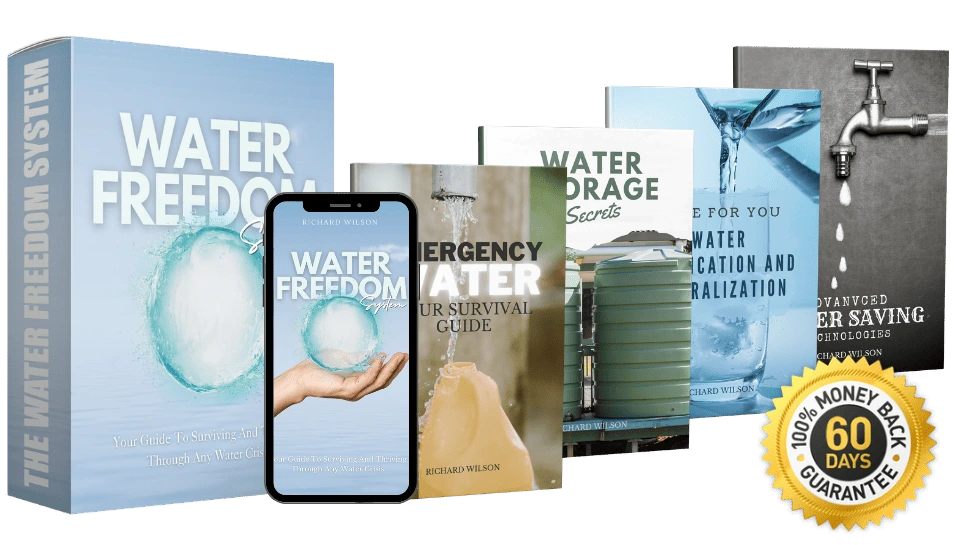
The Water Freedom System is presented as a digital DIY guide that helps users learn about atmospheric water generation and building a water-from-air system at home. In addition to the main blueprint, the program may offer bonus resources designed to provide additional information about emergency preparedness, off-grid living, and water management.
These bonuses may add educational value for people who want to explore alternative water solutions and improve their understanding of household water preparedness. However, the exact bonus contents, availability, and eligibility should be verified on the official sales page.

Free Bonus #1: Emergency Water Preparedness Guide

The Emergency Water Preparedness Guide is a potential bonus resource for people interested in improving their household water planning and learning about alternative water solutions. It may introduce practical information about emergency water storage, water conservation, and preparing for temporary interruptions in regular water supplies.
This type of guide can complement the Water Freedom System by helping users understand the importance of maintaining access to water during unexpected situations. However, the exact title, contents, and availability of this bonus should be verified on the official sales page before making specific promotional claims.

Free Bonus #1: Emergency Water Preparedness Guide
Free Bonus #2: Off-Grid Living Guide
The Off-Grid Living Guide is a potential bonus resource for people interested in sustainable living, self-sufficiency, and alternative water solutions. It may provide educational information about managing essential household resources, exploring off-grid water systems, and preparing for situations where traditional utilities are unavailable.
This bonus could complement the Water Freedom System by helping readers understand the challenges and opportunities associated with off-grid living. However, the exact bonus title, contents, and availability should be verified on the official sales page before making specific claims.


Free Bonus #2: Off-Grid Living Guide
Free Bonus #3: DIY Water Storage & Filtration Guide
The DIY Water Storage & Filtration Guide is a potential bonus resource for people interested in learning more about household water management, storage methods, and filtration systems. It may explain basic practices for maintaining water quality, selecting suitable storage containers, and understanding the role of filtration in alternative water solutions.
This bonus could complement the Water Freedom System by helping users explore practical water storage and treatment considerations for everyday use and emergency preparedness. However, the exact bonus title, contents, and availability should be verified on the official sales page before making specific promotional claims.

Free Bonus #3: DIY Water Storage & Filtration Guide

Pros and Cons Of Water Freedom System 

Pros

1. Beginner-Friendly Guide: The program is designed to explain atmospheric water generation in a simple, easy-to-understand format.

2. DIY Learning: Helps users explore the basic process of building an atmospheric water generator at home.

3. Alternative Water Source: Introduces the concept of collecting moisture from the air as an alternative water-generation method.

4. Educational Materials: May include blueprints, diagrams, and instructional resources to help users understand the proposed system.

5. Off-Grid Interest: Can appeal to people researching alternative water solutions and off-grid living.

6. Emergency Preparedness: Introduces concepts that may be relevant to household water planning during temporary supply disruptions.

7. Practical Technology Exploration: Provides an opportunity to learn about condensation, cooling, and water collection.

Cons

1. DIY Construction Required: Users may need technical skills, tools, and time to assemble a functional system.

2. Water Production Varies: Output depends on humidity, temperature, cooling efficiency, and other environmental conditions.

3. Electricity Requirements: Cooling and airflow components require energy, which may affect operating costs.

4. Additional Expenses: The total cost may include materials, tools, maintenance, replacement filters, and electricity.

5. Drinking-Water Safety: Collected water is not automatically safe to drink and requires appropriate treatment and testing.

6. Maintenance Needed: Cooling components, collection areas, and filtration equipment may require regular cleaning and maintenance.

7. Performance Uncertainty: The actual results of a DIY system depend on its design, construction quality, and operating conditions.

8. Not a Guaranteed Water Supply: The system should not automatically be considered a dependable replacement for municipal water or emergency water storage.

Money Back Guarantee

Water Freedom System 

Water Freedom System is backed by a 100% money back guarantee for 60 full days from your original purchase.

If you're not totally and completely satisfied with the Water Freedom System, your results or your experience in the first 60 days from your purchase simply let us know at Water Freedom System Support Portal and we'll give you a refund within 48 hours no questions asked!

Water Freedom System Money Back Guarantee

How to use Water Freedom System?

The Water Freedom System is a digital DIY guide that explains how to build an Atmospheric Water Generator (AWG) at home. Unlike a ready-made water generator, the system requires users to follow the provided instructions, gather the necessary components, and assemble the proposed device. The following steps explain how to approach the guide and understand the general process of atmospheric water generation.

1. Access the Water Freedom System Guide
Begin by accessing the Water Freedom System digital program through its official website. Review the available instructions, blueprints, diagrams, and educational materials to understand how the proposed atmospheric water generator is designed.
Take time to familiarize yourself with the components and assembly requirements before purchasing materials or starting construction.

2. Review the Materials Checklist
Read the materials list provided in the guide and identify the required components for the proposed DIY water generator. These may include a fan, cooling equipment, water collection reservoir, tubing, filtration components, and electrical parts.
Check the specifications, compatibility, quality, and cost of each component before making a purchase. The actual materials required depend on the blueprint.

3. Understand the Assembly Instructions
Follow the guide's step-by-step building instructions to understand how the components are intended to fit together. Pay particular attention to airflow, condensation surfaces, water drainage, electrical connections, and water-contact materials.
If you lack experience with electrical or refrigeration equipment, consult a qualified professional rather than attempting potentially hazardous work independently.

4. Set Up the Air Intake and Cooling System
An atmospheric water generator typically uses a fan to draw surrounding air into the system. Cooling components then lower the temperature of a suitable surface to encourage water vapor to condense into liquid droplets.
The amount of water produced depends on humidity, temperature, airflow, cooling efficiency, and energy consumption. Follow the specific design instructions and avoid assuming that a compact system will produce a fixed quantity of water.

5. Collect the Condensed Water
As moisture condenses, water droplets are directed into a collection reservoir. Ensure that the collection area and water-contact components are clean, suitable for their intended use, and designed to minimize contamination.
Regular cleaning and proper drainage are important to reduce the risk of microbial growth and water contamination.

6. Apply Appropriate Filtration and Purification
Collected water should undergo suitable treatment based on its intended use and potential contaminants. The guide may describe filtration methods, but filtration alone does not guarantee safe drinking water.
For drinking-water applications, use appropriate purification, sanitation, and water-quality testing. Do not consume water from a DIY system without verifying that its treatment process is adequate.

7. Store Water Safely
If the water is intended for storage, use a clean, suitable container and maintain hygienic storage conditions. Protect the water from contamination during collection, treatment, and storage.
The storage method should be appropriate for the water's intended use.

8. Maintain the System Regularly
Follow suitable maintenance procedures for the fan, cooling components, collection reservoir, tubing, and filtration equipment. Maintenance requirements depend on the system's design and operating conditions.
Regular inspections and cleaning can help support reliable operation and reduce contamination risks.
Who should use Water Freedom System?

The Water Freedom System is a digital DIY guide designed for people interested in learning about atmospheric water generation and exploring how to build a compact water-from-air system at home. It may be suitable for beginners, DIY enthusiasts, and individuals researching alternative water solutions.

Frequently Asked Questions

The Water Freedom System is a digital DIY guide that explains how to build an Atmospheric Water Generator (AWG) at home. It introduces the process of collecting moisture from the air and converting it into liquid water through condensation.

The system explains how a fan draws air into a cooling system, where moisture can condense into liquid water. The collected water may then undergo filtration and purification, depending on the system design.

No. Water Freedom System is presented as a digital guide and training program rather than a ready-made atmospheric water generator. Users interested in building a device would need to review the instructions and obtain the required components.

The guide may interest people exploring off-grid water solutions. However, an atmospheric water generator generally requires a suitable energy source and favorable environmental conditions. It should not be assumed to provide an unlimited or dependable water supply.

The program is described as a digital guide, and the origin of its physical components cannot be confirmed from the information provided. Any Made in the USA claim should be verified through official product documentation.

Yes. A DIY atmospheric water generator may require regular cleaning, inspections, filter replacement, and maintenance of cooling and water collection components. Maintenance requirements depend on the design and usage conditions.

"What happens after I click the " Buy Now" Button?"

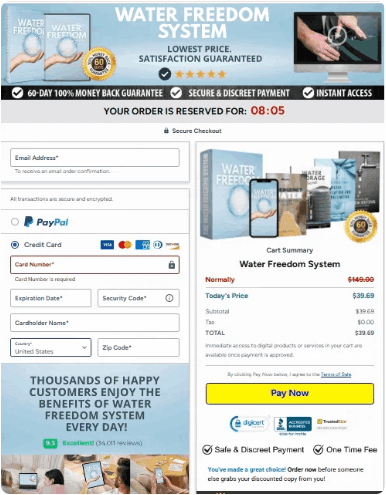
Once you have clicked the "Buy Now" button that is right below this text, you will be taken to the secure checkout page. Just enter your information, and you will then be given instant access to the entire Water Freedom System

Water Freedom System Checkout Page

How Safe Is My Credit Card Information on Your Website?

Your online privacy is one thing you can be sure we so much prioritize here and thus do not worry about losing any sensitive credentials while making your purchase of Water Freedom System from us. Besides, You can count on Clickbank's excellent reputation and vast experience in online transactions to help protect your purchases.

Remarks

According to the team of experts who created Water Freedom System, the manufacturers have come up with an amazing refund policy. So, as you buy any of the above-mentioned packages, you will be provided with a great 60-day 100% money-back guarantee.

If in any case this Product does not work for you or if you’re unsatisfied with the effects of the formula for any reason, then you are entitled to a complete refund with no questions asked.

Email : support@Water Freedom System.com 

Don't Wait Any Longer! Join Your Discounted Program Now!

Water Freedom System

Regular Price: $149

Today Just For : $39

© Copyright 2026 Mobirise. All Rights Reserved.

‌

Free AI Website Builder